Learn Japanese with Demon Slayer (Kimetsu no Yaiba)Episode16





Level: Beginner Japanese (JLPT N5–N4)
Learn basic grammar and everyday expressions through anime dialogue.
Learn basic grammar and everyday expressions through anime dialogue.
Japanese Phrases from Demon Slayer Episode 16 –Letting Someone Else Go First
QUESTION
01
「おい!( )、コラ!」
Hey, let go of me, dammit!
- 1 外せ
- 2 渡せ
- 3 放せ
- 4 戻せ
Answer 3. 放せ
Key Point
「放せ!」 = “Let go!”
The imperative form of 「放す」 (“to release”).
Grammar
放せ、コラ!
→ “Let go of me, dammit!”
放す = to let go / release
放せ = imperative form
A strong, rough command.
Why the Others Are Wrong
外せ Means “remove/take off”
渡せ Means “hand it over”
戻せ Means “put back/return”
Only 「放せ」 is used when telling someone to release their grip.
Tip
Japanese has several verbs that can mean “let go,” but 「放す」 is used when releasing a person or object you’re holding.
Examples
手を放せ!
= “Let go of my hand!”
離して!
= “Let me go!”
Compare
放す = release something you’re holding
離す = separate/move something away from something else
In everyday conversation, 「離して!」 is often more common than 「放して!」.
Key Point
「放せ!」 = “Let go!”
The imperative form of 「放す」 (“to release”).
Grammar
放せ、コラ!
→ “Let go of me, dammit!”
放す = to let go / release
放せ = imperative form
A strong, rough command.
Why the Others Are Wrong
外せ Means “remove/take off”
渡せ Means “hand it over”
戻せ Means “put back/return”
Only 「放せ」 is used when telling someone to release their grip.
Tip
Japanese has several verbs that can mean “let go,” but 「放す」 is used when releasing a person or object you’re holding.
Examples
手を放せ!
= “Let go of my hand!”
離して!
= “Let me go!”
Compare
放す = release something you’re holding
離す = separate/move something away from something else
In everyday conversation, 「離して!」 is often more common than 「放して!」.
QUESTION
02
「戻って( )絶対殴るからな!」
I’m so gonna punch you when I get back!
- 1 来たら
- 2 来ると
- 3 来れて
- 4 来ても
Answer 1. 来たら
Key Point
「〜たら」 = “when / if”
Used to talk about something that will happen after another action is completed.
Grammar
戻って来たら
→ “when I come back”
戻って来る = to come back
来たら = when I come back
Why the Others Are Wrong
来ると Means “when,” but sounds unnatural with a personal intention like this
来れて Means “being able to come”
来ても Means “even if I come back”
Only 「来たら」 correctly means “when I get back.”
Tip
「〜たら」 is often used for future actions.
Examples
家に帰ったら寝る。
= “I’ll sleep when I get home.”
終わったら教えて。
= “Let me know when you’re done.”
Key Point
「〜たら」 = “when / if”
Used to talk about something that will happen after another action is completed.
Grammar
戻って来たら
→ “when I come back”
戻って来る = to come back
来たら = when I come back
Why the Others Are Wrong
来ると Means “when,” but sounds unnatural with a personal intention like this
来れて Means “being able to come”
来ても Means “even if I come back”
Only 「来たら」 correctly means “when I get back.”
Tip
「〜たら」 is often used for future actions.
Examples
家に帰ったら寝る。
= “I’ll sleep when I get home.”
終わったら教えて。
= “Let me know when you’re done.”
QUESTION
03
「あなたたちに倒せる( )。」
I wonder if you can defeat them.
- 1 よね
- 2 みたい
- 3 でしょう
- 4 かしら
Answer 4. かしら
Key Point
「〜かしら」 = “I wonder…”
A sentence ending often used by women to express a thought or question to themselves.
Grammar
倒せるかしら
→ “I wonder if (you) can defeat them.”
倒せる = can defeat
かしら = I wonder
Why the Others Are Wrong
よね Seeks agreement (“right?”)
みたい Means “seems like / looks like”
でしょう Means “probably / right?”
Only 「かしら」 naturally expresses “I wonder.”
Tip
「かしら」 is similar to 「かな」
Examples
大丈夫かしら。
= “I wonder if it’ll be okay.”
来るかしら。
= “I wonder if they’ll come.”
Compare
大丈夫かな。 → common for anyone in casual speech
大丈夫かしら。 → softer, traditionally feminine speech often heard in anime and dramas
Key Point
「〜かしら」 = “I wonder…”
A sentence ending often used by women to express a thought or question to themselves.
Grammar
倒せるかしら
→ “I wonder if (you) can defeat them.”
倒せる = can defeat
かしら = I wonder
Why the Others Are Wrong
よね Seeks agreement (“right?”)
みたい Means “seems like / looks like”
でしょう Means “probably / right?”
Only 「かしら」 naturally expresses “I wonder.”
Tip
「かしら」 is similar to 「かな」
Examples
大丈夫かしら。
= “I wonder if it’ll be okay.”
来るかしら。
= “I wonder if they’ll come.”
Compare
大丈夫かな。 → common for anyone in casual speech
大丈夫かしら。 → softer, traditionally feminine speech often heard in anime and dramas
QUESTION
04
「ちょっと時間が( )すぎじゃない?」
Don’t you think this is taking too much time?
- 1 かかり
- 2 のび
- 3 とり
- 4 つかい
Answer 1. かかり
Key Point
「時間がかかる」 = “to take time”
A very common expression meaning that something requires a lot of time.
Grammar
時間がかかりすぎ
→ “taking too much time”
時間がかかる = to take time
〜すぎ = too much / excessively
Why the Others Are Wrong
のび Comes from 「伸びる」 (“to stretch/extend”), but 「時間がのびる」 is not the usual expression here
とり From 「取る」 (“to take”), but we don’t say 「時間がとりすぎ」
つかい Means “use/usage”
Only 「かかり」 correctly forms 「時間がかかりすぎ」
Tip
「〜すぎ」 attaches to verb stems and adjectives to mean “too much.”
Examples
食べすぎた。
= “I ate too much.”
働きすぎだ。
= “You work too much.”
Key Point
「時間がかかる」 = “to take time”
A very common expression meaning that something requires a lot of time.
Grammar
時間がかかりすぎ
→ “taking too much time”
時間がかかる = to take time
〜すぎ = too much / excessively
Why the Others Are Wrong
のび Comes from 「伸びる」 (“to stretch/extend”), but 「時間がのびる」 is not the usual expression here
とり From 「取る」 (“to take”), but we don’t say 「時間がとりすぎ」
つかい Means “use/usage”
Only 「かかり」 correctly forms 「時間がかかりすぎ」
Tip
「〜すぎ」 attaches to verb stems and adjectives to mean “too much.”
Examples
食べすぎた。
= “I ate too much.”
働きすぎだ。
= “You work too much.”
QUESTION
05
「死ね!死ね!( )死ね!」
Die! Die! Just die already!
- 1 もれなく
- 2 さっさと
- 3 とっくに
- 4 すんなり
Answer 2. さっさと
Key Point
「さっさと」 = “quickly / already”
Often used when telling someone to do something without delay.
Grammar
さっさと死ね!
→ “Just die already!”
さっさと = quickly / without wasting time
死ね = imperative form of 死ぬ
A very forceful command.
Why the Others Are Wrong
もれなく Means “without exception / included”
とっくに Means “already long ago”
すんなり Means “smoothly / without difficulty”
Only 「さっさと」 naturally fits a command demanding immediate action.
Tip
「さっさと」 is often used when the speaker is impatient or annoyed.
Examples
さっさと行け。
= “Get going already.”
さっさと宿題をやりなさい。
= “Do your homework already.”
Compare
早く = quickly (neutral)
さっさと = hurry up and do it (impatient)
Key Point
「さっさと」 = “quickly / already”
Often used when telling someone to do something without delay.
Grammar
さっさと死ね!
→ “Just die already!”
さっさと = quickly / without wasting time
死ね = imperative form of 死ぬ
A very forceful command.
Why the Others Are Wrong
もれなく Means “without exception / included”
とっくに Means “already long ago”
すんなり Means “smoothly / without difficulty”
Only 「さっさと」 naturally fits a command demanding immediate action.
Tip
「さっさと」 is often used when the speaker is impatient or annoyed.
Examples
さっさと行け。
= “Get going already.”
さっさと宿題をやりなさい。
= “Do your homework already.”
Compare
早く = quickly (neutral)
さっさと = hurry up and do it (impatient)
QUESTION
06
「でないと私がひどい( )にあう。」
Or else there’ll be hell for me to pay!
- 1 目
- 2 事
- 3 日
- 4 手
Answer 1. 目
Key Point
「ひどい目にあう」 = “to have a terrible experience”
A common expression meaning to suffer or go through something unpleasant.
Grammar
ひどい目にあう
→ “to suffer” / “to have a terrible experience”
ひどい = terrible
目にあう = to experience
Together, they form a fixed expression.
Tip
「目」 is often used in Japanese idiomatic expressions.
Examples
ひどい目にあう
= “have a terrible experience”
痛い目にあう
= “suffer the consequences”
–Other common body-part expressions–
耳が痛い
= “That hits close to home.”
鼻をあかす
= “Show someone up.”
顔を立てる
= “Save someone’s face.”
Key Point
「ひどい目にあう」 = “to have a terrible experience”
A common expression meaning to suffer or go through something unpleasant.
Grammar
ひどい目にあう
→ “to suffer” / “to have a terrible experience”
ひどい = terrible
目にあう = to experience
Together, they form a fixed expression.
Tip
「目」 is often used in Japanese idiomatic expressions.
Examples
ひどい目にあう
= “have a terrible experience”
痛い目にあう
= “suffer the consequences”
–Other common body-part expressions–
耳が痛い
= “That hits close to home.”
鼻をあかす
= “Show someone up.”
顔を立てる
= “Save someone’s face.”
QUESTION
07
「役に立たたない人形( )!」
They’re all such useless dolls!
- 1 どおり
- 2 だから
- 3 ほど
- 4 ばかり
Answer 4. ばかり
Key Point
Used when a group consists entirely of one kind of thing, often with a negative feeling.
Grammar
役に立たない人形ばかり!
→ “Nothing but useless dolls!”
役に立たない = useless
ばかり = nothing but / all
Meaning
The Mother Spider Demon is complaining that all of her puppets are useless and failing to do what she wants.
Tip
「〜ばかり」 often expresses frustration or dissatisfaction.
Examples
間違いばかりしている。
= “You keep making mistakes.”
嫌なことばかりだ。
= “Nothing but bad things happen.”
Key Point
Used when a group consists entirely of one kind of thing, often with a negative feeling.
Grammar
役に立たない人形ばかり!
→ “Nothing but useless dolls!”
役に立たない = useless
ばかり = nothing but / all
Meaning
The Mother Spider Demon is complaining that all of her puppets are useless and failing to do what she wants.
Tip
「〜ばかり」 often expresses frustration or dissatisfaction.
Examples
間違いばかりしている。
= “You keep making mistakes.”
嫌なことばかりだ。
= “Nothing but bad things happen.”
QUESTION
08
「でも、、死ねば、解放される。( )になれる。」
But… if I die, I’ll be released. And then, I’ll know peace.
- 1 楽
- 2 静か
- 3 平ら
- 4 安心
Answer 1. 楽
Key Point
「楽になる」 = “to be relieved / be free from suffering”
A common expression used when pain, stress, or hardship goes away.
Grammar
楽になれる
→ “can be at peace” / “can be relieved”
楽 = comfort / relief
になる = become
Why the Others Are Wrong
静か Means “quiet,” but 「静かになれる」 doesn’t fit the context as naturally
平ら Means “flat/level”
安心 Means “peace of mind,” but 「安心になれる」 is unnatural; Japanese uses 「安心できる」 instead
Only 「楽」 forms the common expression 「楽になる」
Tip
「楽になる」 is often used for both physical and emotional suffering.
Examples
痛みがなくなって楽になった。
= “The pain went away, and I felt relieved.”
話したら楽になった。
= “I felt better after talking about it.”
Compare
楽になる
= “be free from suffering”
安心する
= “feel relieved / reassured”
静かになる
= “become quiet”
Key Point
「楽になる」 = “to be relieved / be free from suffering”
A common expression used when pain, stress, or hardship goes away.
Grammar
楽になれる
→ “can be at peace” / “can be relieved”
楽 = comfort / relief
になる = become
Why the Others Are Wrong
静か Means “quiet,” but 「静かになれる」 doesn’t fit the context as naturally
平ら Means “flat/level”
安心 Means “peace of mind,” but 「安心になれる」 is unnatural; Japanese uses 「安心できる」 instead
Only 「楽」 forms the common expression 「楽になる」
Tip
「楽になる」 is often used for both physical and emotional suffering.
Examples
痛みがなくなって楽になった。
= “The pain went away, and I felt relieved.”
話したら楽になった。
= “I felt better after talking about it.”
Compare
楽になる
= “be free from suffering”
安心する
= “feel relieved / reassured”
静かになる
= “become quiet”
QUESTION
09
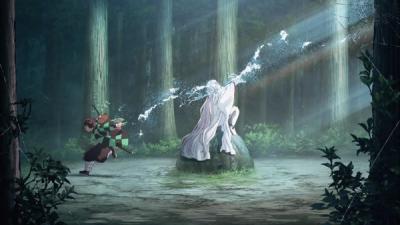
「これは、、、優しい雨に打たれてるような( )。」
This is… It feels like I’m being showered by a gentle rain.
- 1 感情
- 2 感心
- 3 感覚
- 4 感動
Answer 3. 感覚
Key Point
「感覚」 = “feeling / sensation”
Used for a physical or emotional sensation.
Grammar
優しい雨に打たれてるような感覚
→ “a feeling like being showered by a gentle rain”
〜ような = like / as if
感覚 = feeling / sensation
Meaning
The Mother Spider Demon doesn’t literally feel rain.
She is describing the gentle, peaceful sensation created by Tanjiro’s attack.
Why the Others Are Wrong
感情 Means “emotion”
感心 Means “admiration/impressed feeling”
感動 Means “being deeply moved”
Only 「感覚」 means a sensation or feeling like the one she describes.
Tip
Japanese distinguishes between 感情 (emotion) and 感覚 (sensation).
Examples
不思議な感覚だ。
= “It’s a strange feeling.”
痛みの感覚がない。
= “I have no sense of pain.”
Compare
感情 → emotion (love, anger, sadness)
感覚 → sensation, feeling, sense (warmth, pain, a strange feeling)
Key Point
「感覚」 = “feeling / sensation”
Used for a physical or emotional sensation.
Grammar
優しい雨に打たれてるような感覚
→ “a feeling like being showered by a gentle rain”
〜ような = like / as if
感覚 = feeling / sensation
Meaning
The Mother Spider Demon doesn’t literally feel rain.
She is describing the gentle, peaceful sensation created by Tanjiro’s attack.
Why the Others Are Wrong
感情 Means “emotion”
感心 Means “admiration/impressed feeling”
感動 Means “being deeply moved”
Only 「感覚」 means a sensation or feeling like the one she describes.
Tip
Japanese distinguishes between 感情 (emotion) and 感覚 (sensation).
Examples
不思議な感覚だ。
= “It’s a strange feeling.”
痛みの感覚がない。
= “I have no sense of pain.”
Compare
感情 → emotion (love, anger, sadness)
感覚 → sensation, feeling, sense (warmth, pain, a strange feeling)
QUESTION
10
「( )痛くない。苦しくもない。ただ、温かい。」
It doesn’t hurt at all. It’s not agonizing. I just feel warm.
- 1 大いに
- 2 少しも
- 3 程よく
- 4 わずかに
Answer 2. 少しも
Key Point
「少しも〜ない」 = “not at all”
A common pattern used to completely deny something.
Grammar
少しも痛くない
→ “It doesn’t hurt at all.”
少しも = even a little
〜ない = not
Together: “not even a little.”
Why the Others Are Wrong
大いに Means “greatly / very much”
程よく Means “moderately”
わずかに Means “slightly”
Only 「少しも」 is commonly used with a negative form.
Tip
「少しも」 is almost always paired with a negative verb.
Examples
少しも分からない。
= “I don’t understand at all.”
少しも怖くない。
= “I’m not scared at all.”
Similar expressions
全然〜ない
= “not at all”
まったく〜ない
= “not at all / absolutely not”
Key Point
「少しも〜ない」 = “not at all”
A common pattern used to completely deny something.
Grammar
少しも痛くない
→ “It doesn’t hurt at all.”
少しも = even a little
〜ない = not
Together: “not even a little.”
Why the Others Are Wrong
大いに Means “greatly / very much”
程よく Means “moderately”
わずかに Means “slightly”
Only 「少しも」 is commonly used with a negative form.
Tip
「少しも」 is almost always paired with a negative verb.
Examples
少しも分からない。
= “I don’t understand at all.”
少しも怖くない。
= “I’m not scared at all.”
Similar expressions
全然〜ない
= “not at all”
まったく〜ない
= “not at all / absolutely not”